


Does Beef Tallow Clog Pores? An Honest Answer, by Skin Type
Updated By Rina AhluwaliaShort answer: for most people, no. Beef tallow sits low on the comedogenic scale, and plenty of people with acne-prone skin use it without a single new spot. But "most people" is not "everyone." The honest answer comes down to three things: your skin type, how much you use, and the quality of the tallow. Let's get into it, because the internet has turned this into a shouting match and the truth is calmer than both sides make it sound.
The honest short answer
If you skim nothing else, here it is:
- For most skin types, used correctly: tallow is low-risk and unlikely to clog your pores.
- For oily or acne-prone skin: it can clog for some people, so go slow, use a little, and patch-test first.
- When it does clog, the cause is almost always one of three things: too much product, low-quality tallow, or using a rich balm on skin that makes plenty of its own oil.
Quality and quantity matter far more than the scary headlines. Now the details.
What "comedogenic" actually means
"Comedogenic" is just a word for how likely an ingredient is to block a pore. It's rated on a scale from 0 (won't clog) to 5 (very likely to clog). Beef tallow usually lands around a 2, on the lower-middle end of that scale.
Why so low? Tallow's fatty-acid profile is close to the oils your own skin makes, so it tends to absorb into the skin instead of sitting on top of it and trapping things in. That similarity is the whole reason tallow feels at home on skin. If you want the plain-language version of what tallow even is, we wrote what tallow balm is here.
One honest caveat: a rating of 2 is "low," not "zero." A 2 can still be too much for very oily or easily-congested skin. The scale is a guide, not a promise, and it can't account for your skin.

So why do some people break out from tallow?
Real people do report clogged pores from tallow, and it's not in their heads. Here are the usual reasons, roughly in order of how often they're the culprit:
- Too much product. This is the number-one cause. Tallow is rich. You need a pea-sized amount and you want it fully soaked in, with no greasy film left on top. A film of leftover balm is a film that can trap oil and dirt.
- Low-quality or poorly rendered tallow. Cheap or badly made tallow can carry impurities and additives that irritate skin and block pores. Grass-fed, cleanly rendered tallow with a short ingredient list is a different product from a bargain tub of mystery fat.
- Your skin type. If your skin already makes plenty of oil, adding a rich, occlusive layer can tip it over into congestion. Same product, different skin, different result.
- Putting it on skin that isn't clean. Anything occlusive seals in whatever is under it. On a freshly washed face that's a good thing. Over the day's dirt and sunscreen, less so.
There's also a difference between purging and clogging. A few small bumps in the first week that settle down can just be your skin adjusting. New, persistent clogs that keep coming are your skin telling you to use less, or to keep tallow to your body.
Does beef tallow clog pores for your skin type?
This is the part most arguments skip. "Does tallow clog pores" doesn't have one answer, because skin isn't one thing.
Dry, mature, or normal skin: usually the happiest with tallow. The sebum-like fats soften and fill in dry, flaky patches, and clogging is rare. One reviewer, Simona, who is 65, put it simply: "My skin feels so happy, supple, soft. One face product. No more lotions and potions and serums."
Sensitive or reactive skin: often does well with a simple, fragrance-free tallow, but it's the group that should patch-test the longest. Emily told us she had "no problem with my sensitive skin," and Tamara, who has rosacea, said her skin responded "without redness from rosacea or breakouts." Results vary, so go slow.
Oily or acne-prone skin: the group to be a little more thoughtful with, though plenty of people here use tallow happily. Because your skin already makes plenty of oil, a little goes a long way: use a pea-sized amount, patch-test on your jaw for a week, start on your body, or reach for a wash-off tallow soap. Tallow's fatty acids are close to your skin's own oils, so some people find it actually helps their skin feel calmer and more balanced over time. If you have active acne, check with your dermatologist first.
Combination skin: spot-test. Many people use a little tallow on dry cheeks and skip the oily T-zone entirely.
How to use tallow without clogging your pores
If you want the prevention checklist, this is it:
- Use a pea-sized amount. Less is genuinely more. You can always add a touch; you can't un-apply too much.
- Apply to clean, slightly damp skin, ideally right after washing, so you're sealing in water, not the day's grime.
- Choose quality. Grass-fed, grass-finished, cleanly rendered, with a short ingredient list you can actually read. Cheap fat is where a lot of "tallow broke me out" stories start. (Here's what's really in your tallow balm and how to read a label.)
- Pick a lighter texture. A whipped tallow balm is aerated, so it melts in fast and leaves less sitting on the surface than a dense, waxy stick.
- Patch-test for a few days on your jaw or neck before you commit your whole face.
- Start on your body if you're nervous. Hands, elbows, and shins are a low-stakes way to see how your skin likes tallow.
- Give it about two weeks, then judge. Stop if you get persistent, new clogged pores.
Why are some dermatologists cautious about tallow?
It's a fair question, and the answer is calmer than the headlines suggest. A lot of the caution simply comes from tallow being new to the modern skincare conversation, even though people have used it on their skin for generations. It hasn't been packaged and patented the way lab-formulated creams have, so it doesn't arrive with the same marketing studies behind it. But "not made in a lab" is not the same as "not safe." Tallow is a single, simple, food-grade ingredient, not a long list of synthetic actives and preservatives.
For a lot of people, that's the whole appeal. A conventional moisturizer is often mostly water held together with synthetic chemicals, fragrance and fillers. Tallow is one natural fat whose fatty acids are close to the oils your skin already makes, so your skin tends to recognize it and put it to use. The soft layer it forms helps seal in moisture and soften dry skin, which is a feature, not a flaw.
Here's the honest part, because we always include it: tallow is rich, so if your skin is very oily or acne-prone, use a little and patch-test first. And if you have active acne or a skin condition, your dermatologist knows your skin best. For most people with dry, normal or sensitive skin, a small amount of clean, grass-fed tallow is a simple, natural way to moisturize, without the lab-made extras.
Tallow soap vs tallow balm: a lower-risk way in
Here's a distinction the debate usually misses. A tallow soap rinses off, so it spends seconds on your skin and has very little chance to clog a pore. A leave-on balm stays on, which is exactly why amount, quality, and skin type matter most there. If you love the idea of tallow but you're prone to congestion, starting with a wash-off tallow soap is the gentlest way to test the waters.
The same wash-off logic applies to your scalp. If tallow suits your skin, a cleanses hair and scalp without stripping, and rinses clean so there's little clog risk.
What to look for in a low-clog tallow balm
If you do want a leave-on balm, stack the odds in your favor:
- Grass-fed and grass-finished tallow, for a cleaner fat.
- A whipped, light texture that absorbs instead of sitting on top.
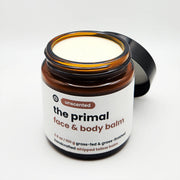
- A short, named ingredient list, and unscented if your skin is reactive. Our unscented whipped tallow balm is the simplest pick for sensitive or breakout-prone skin.
That's the kind of balm Kendra uses: "He uses it on his face and bald head, and I use it on my face too. It doesn't make me break out at all and leaves our skin feeling incredibly soft." Want to see real skin over time? Here are beef tallow before and after results with photos.
The honest verdict
For most people, used correctly, beef tallow won't clog your pores. It's a simple, natural fat that's close to your skin's own oils, which is exactly why so many people get along with it. If your skin is oily or acne-prone, just go gentle: a pea-sized amount of a quality grass-fed balm, a patch test, or a wash-off tallow soap. The clogged-pore horror stories almost always trace back to too much product or cheap, poorly made fat, not to tallow itself. Start small, choose a clean grass-fed balm, and let your own skin be the judge. It will tell you the truth faster than any influencer or headline can.
A quick note: this is general skincare information, not medical advice. Skin is personal, results vary, and if you have persistent acne or a skin condition, check with your dermatologist before adding anything new.


